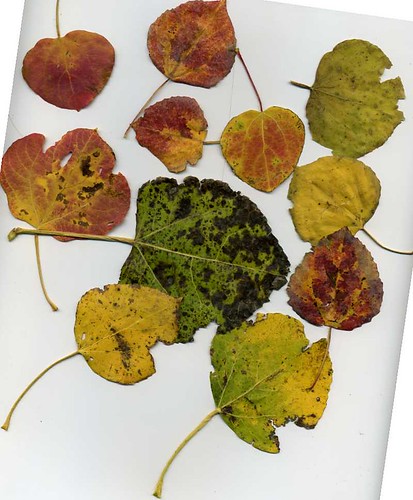
" Children should also become familiar with trees at an early age. They should pick about six in the winter when the leaves are gone, perhaps an elm, a maple, a beech, etc, and watch them during the year." Charlotte Mason in Modern English, volume 1, page 52
Way back last August of 2007 we started our first tree study out in the woods. We took a piece of yarn and staked out a big square around the tree and did observations within that square and then also about the tree. The oak is really big and has lots of interesting things about it.
Here are a couple of the older entries to compare with this entry.
Here is the whole tree...in the dry grass and among the rodent holes. The whole area is like a mine field with little holes and mounds everywhere. Rodent holes Here is our yarned off square. You can barely see the purple yarn unless you click and enlarge the photo. Not much there except a few new little baby oak trees. And near-by there was this poison oak turning red.....watch out for that stuff. Then we noticed that as we walked we were being stuck by this plant....start thistle. I would consider this a WEED! Our backyard had this plant growing all over the backside when we moved in twenty years ago and my husband has very lovingly removed it all one plant at a time. We found you have to pull it up roots and all in order to get rid of it. It is an invasive weed in our area. After we got back to the car, we realized our shoelaces and socks were covered with stickers of all kinds. They stick like velcro.
Well that wraps up our year-long tree study for now. We will probably keep our yarn up and continue through another year to see if we see any more changes.
“Besides appreciating the world, observing nature develops other mental powers-ability to focus, to tell things apart, to patiently seek answers. These things are useful in every facet of life.” Charlotte Mason in Modern English, volume 1 page 61
With each new season we learn more about the natural world and the wonderful cycles we find in it. The seasons are a way to measure time and to learn to understand the subtle changes we find in the plants and animals that live close to home. (Gen. 1:14) We started a year-long tree study nine challenges ago and it should be a good time to make our next seasonal observation.
“And what about those six trees that the children were watching since winter? Now children will see that they also flower, although those flowers may be as green as the leaves. …This is old news to grown-ups, but a good teacher will present all knowledge as new and exciting by imagining himself in the place of the child and being amazed with him.” Charlotte Mason in Modern English, volume 1 page 53
Your tree should have leaves for this season's observation and if you were not able to identify your tree before, this should help you do so at this time. If you are just starting your year-long tree study, consult the Handbook of Nature Study’s table of contents for trees and see if you can find a tree that you have close by your home. Turn to the corresponding section and it will give you lots of ideas for learning about your tree. You are not limited to the trees covered in the Handbook of Nature Study but if you choose a tree not listed, you will need to find your information either at your local library or on the internet.
Outdoor Challenge #20Seasonal Tree Observation-Summer
1. We started a tree study project way back in challenge #11 and make our first observations of our tree. If you would like to review this section in the Handbook of Nature Study, you will find it on pages 622-626. This week the challenge includes making the next seasonal observation of your tree. If your first observation was in spring, you are now into summer and your tree should look a little different. If you are just joining the challenges, pick a tree from your yard, your street, or a near-by park to observe over the course of the next year. Check in the Handbook of Nature Study to see if your tree is listed there and then do the reading about that particular tree. There should be some suggestions for observations that you can follow. You can use the prepared seasonal tree study page to record your observations.
2. Take your 10-15 minute outdoor time to study the tree you are going to observe over the next year. You can take photos of your tree to put in your nature journal or you can sketch the tree in your journal. If you need help with tree sketching you can use this resource. Clare Walkers Leslie's Guide to Sketching Trees
3. If you have additional time this week, you could complete another small square activity from Challenge #9.
4. After your outdoor time, complete your Seasonal Tree Study notebook pagesheet or record your tree observations in your nature journal. Take a few minutes to talk about your time outdoors to see if there is anything that your child wants to learn more about. Follow up any interest shown.
Mini-Challenge #20Year-Long Tree Study This challenge can be done with or without the Seasonal Tree Study notebook page. If you have limited time or are trying to combine challenges, pick your tree and make a few short observations. Spend the balance of your time reading about your tree so that during the next season you can review what you have already learned and compare your observations from season to season.
Post an entry on your blog sharing your experiences. You can link up by clicking the carnival button or you can send them directly to me: harmonyfinearts@yahoo.com.
You can purchase all of the first ten challenges in a convenient ebook along with custom notebook pages.
Can you see the "puzzle piece" look to the bark? I found this to explain the bark's appearance:
Approaching 125 to150 years old, the furrowed Ponderosa Pine bark again transforms, taking on the flaky reddish-orange to yellowish colored bark of old-growth trees. Composed of numerous thin layers that resemble jigsaw-puzzle pieces, this colored bark gives the trees their nicknames “yellowbellies” or “pumpkins.” Resembling an impressionist painting, the bark pieces are a subtle mosaic of yellow and brown hues. Ponderosa Pine-DesertUSA.com (I would recommend reading this whole article because I found lots of really great information on the Ponderosa pine from it.)
"The pines are among our most ancient trees. Their foliage is evergreen but is shed gradually. The pollen-bearing and the seed-producing flowers are separate on the trees. The seeds are winged and are developed in cones." Handbook of Nature Study, page 674
There is a whole section on various pines along with observations ideas on pages 670-675 of the Handbook of Nature Study. I found that most of the ideas are applicable to any variety of pine tree.
My field guide says this about the Ponderosa Pine: "Sooty grouse, California quail, and both red and gray squirrels eat the seeds: porcupines feed on the inner-bark, deer browse the twigs and needles. Native Americans are reported to have used the seeds for food and the trunk resin to waterproof fiber and wicker containers."
For this challenge we were to choose a tree to study for a year, observing it in each season to notice the changes. My son and I used the Tree Study sheet to prompt our observations but in the Handbook of Nature Study on page 625 there is a section on "Spring Work" to use with your own tree.
My son has suddenly taken an interest in basketball and is bouncing a ball in every spare moment. I tore him away yesterday afternoon to have him to pick his tree and do a quick observation. He picked one of the sweet gum trees that we have growing just off our back deck. We have four of these trees planted as a shade break for the hot summer afternoons. They are perfect for shading us for the late summer sun and then they loose all their leaves in the winter and allow the sun to hit our house in the winter to make it light and cheery. They also turn the most magnificent colors in the autumn and make the view out our back windows very colorful and enjoyable to look at....I can see them as I wash dishes at the kitchen sink. they are not native to our area but they are very popular as tree plantings in neighborhoods and in yards for shade and their beauty.
So here is a copy of his notebook page for his journal. I am going to slip it into a sheet protector and hopefully the leaf will survive for the year that we have ahead. At least we will have the scan of the page so we can compare on the computer if we need to.
Here is a little sampling of photos from his tree taken on May 3, 2008.
(note the bouncing basketball....I don't always get rapt attention for nature study)
(click this photo and you will see an ant on the bark)
You can join the Green Hour Challenges at any time. Look on the sidebar of this blog for links to all the challenges.
Lemon blossoms have a surprising colored bud. We purchased this lemon tree last fall and we carefully cared for it all winter. It looked pretty bad at one point and I wasn't sure it was going to make it through all the frosts we had but a few days ago it pushed out so many blossom buds that I am sure it is going to be fine.
There is nothing in the Handbook of Nature Study about lemons or anything citrus that I can find but we will be watching this tree as it develops over the year.
If you have been following along with the challenges and you picked a focus way back in challenge number four, you should be just about ready to wrap up your first focus study. Our family has been learning about garden flowers but we are soon going to switch over to wildflowers. (This is going along with my son's study of Kingdom plantae in biology.)
This is a good time to start a seasonal tree study. You will be picking a tree in your yard or neighborhood that you could "adopt" for a year to observe and record the changes in each season. I encourage everyone to start their year long tree study with the group this week. This part of the challenge should take one week to complete and then in our next challenge we will be starting a group focus study of wildflowers or garden flowers. Please Note:If your family is enjoying your current focus, you do not need to switch but you can follow your own path and keep us posted.
Observing our tree Fall 2007
Outdoor Hour Challenge #11 Begin a Four Season Tree Study
1. Read in the Handbook of Nature Study pages 622-623. Also read page 625, Spring Work. After reading, turn to the table of contents, to the tree section, and read the list of trees covered in this book. If possible, pick a tree from the list that you have in your yard, on your street, or in a near-by park that you can observe over the course of the next year. My boys and I have been working on a tree study with an oak tree since August 2007. The changes in the tree have given us something to study in each season. If you live in a more exotic location, like some participants who live in Australia, Brazil, or Spain, do your best to compare your tree to a similar tree in the Handbook of Nature Study. Many of the observations can be used to study a variety of trees.
Before heading out for your nature study time, read the introductory section for your focus tree with your children. Make sure to read the observation suggestions for your particular tree and keep these in mind as you go out to make your observations. You will be challenged in each season of the coming year to make an observation for your tree and record any changes. I have prepared a journal page to record your observations. See the end of the blog entry for a link to the journal page.
2. Take your 10-15 minute outdoor time to study the tree you are going to observe over the next year. We took photos of our tree to put in our nature journal or you can sketch them right into your journal. Keep in mind the suggestions for observation that you read in the Handbook of Nature Study. If you have younger children, just spend your time observing your tree and helping them to look at it closely.
3. Add anything new to your list of items observed in your focus area (challenge #4) that you are keeping in your nature journal. Make note of any additional research that needs to be done to follow up interest found during your Outdoor Hour.
4. Complete the Seasonal Tree Studyjournal page with your child. Place the page in your nature notebook to have for comparison in the next seasonal tree challenge.
5. Post an entry on your blog sharing your experiences. You can link up by clicking the carnival button or you can send them directly to me: harmonyfinearts@yahoo.com.
You can purchase all of the first ten challenges in a convenient ebook along with custom notebook pages.
Dogwood blooms are so beautiful to observe and really mean that spring has arrived.
The Handbook of Nature Study, page 680 "The flowering dogwood forms its buds during the summer, and of course they must have winter protection. They are wrapped in four close-clasping, purplish brown scales, one pair inside and one pair outside, both thick and well fitted to protect the bunch of tiny flower buds at their center. But when spring comes, these bud scales change their duties, and by rapid growth become four beautiful white or pinkish bracts which we call the dogwood flower."
Wow, I never knew that before. There is more information on the dogwood in the Handbook of Nature Study on pages 680-682. Thanks to Jennifer for hosting an April Showers of Photos challenge on her blog S/V Mari Hal-O-Jen.
It is my wish to guide you in using the Handbook of Nature Study. This entry will be about how to use this book with objects that you find in your local area that are not specifically listed in the index. I think this is such an important skill to develop.
How about we use some specific examples? Sebastian over at Percival Blakeney Academy found some plumeria blossoms on her nature walk with her children. She didn't find the plumeria listed in the HNS's index. How can we use the book to learn more about this flower? 1. Turn to the table of contents and scan down until you get to "Plants". Turn to the introductory pages starting on page 453. 2. Read to yourself the introduction on how to begin the study of plants and their flowers. 3. Turn to the section on "How to Teach the Names of the Parts of a Flower and of the Plant" on page 456. This will give you some specific names for parts of any flower and they could be applied to the plumeria bloom. If you want to get some further ideas for studying the plumeria blossom, you could ask yourself what plant or tree you think the plumeria resembles and I thought of the dogwood tree since they are both blooming trees. 1. Turn to the section on the dogwood on page 680. 2. Read through the section and see if there are any tidbits you can apply to your study of the plumeria. Make sure to get to the observations section and use the suggestions that would apply to the plumeria. (Can you see how many petals the flower has? How many stamens has it? Can you see the pistil? Find one of the flower-heads not yet opened and watch it open and develop. Sketch the bracts from below.)
It is not a perfect study of the plumeria but it will give you ways to observe the flower. The Handbook of Nature Study is meant to help you learn to observe and investigate rather than as a source of information. (see page 24)
Want another example? Jessica at Trivium Academy shared about finding a tree stump and how she talked about the tree's rings and how it grows. What if you weren't sure what the rings meant and were not sure how to explain how a tree grows to your child? Here's how I would go about using the Handbook of Nature Study to help find the answers. 1.Turn to the table of contents and scan down in the plants section until you get to trees. Read the list of subtopics for trees and find any that sound like they might help in your investigation. 2. Turn to page 618 and read the introduction to yourself. On page 620 there is a photo of a cross-section of a tree trunk and this section might be helpful to read. There is a heading on page 620 relating the way a tree grows. Read that and highlight any parts you want to eventually share with your children later in the week.
It took me a long time to figure out how to use the book without being frustrated. The Handbook of Nature Study is a wonderful tool in training parents how to teach their children to investigate nature. We just need to be more familiar with the ways to use it in our homeschooling.
"The author feels apologetic that the book is so large. However, it does not contain more than any intelligent country child of twelve should know of his environment; things that he should know naturally and without effort, although it might take him half his life-time to learn so much if he should not begin before the age of twenty."Handbook of Nature Study, page xiii
Today was such a sunny day in our area and I needed a little "photo therapy". I went out in the garden and took about 50 photos. This little winged insect was sitting so still on the lavender blossom. There were actually a few blossoms with such beautiful colors in the brilliant sunshine.
I don't know what kind of insect this is but I will keep on trying to identify who he is. I think it is okay to not actually identify each and every insect we find but keep it as a work in progress.
How about this sky?
From page 624 in the Handbook of Nature Study regarding tree study, winter work: "1. Make a sketch of the tree in your notebook, showing its shape as it stands bare."or "3. Take a twig of a tree in February and look carefully at the buds. What is their color? Are they shiny, rough, sticky, or downy?"or "4. What birds do you find visiting your tree during winter."
Check out all the ideas in your copy of the book.
Look at this silhouette!
One last photo. Could that be my bulbs sprouting already?
It is really hard to get a good photo of the big trees and all your kids at the same time. It is rather dark underneath this forest canopy .
Fallen trees are great for walking on, or falling off of in my case. I was so busy trying too look at some cool fungus that I slipped totally off and fell down. Okay, everyone laughed but it wasn't too funny for me. :)
Seed cones from the sequoia tree are rather small. Baby sequoias
A variety of fungus was all around at this time of year....too bad I didn't have a field guide. Oh well, next time.
Here are some photos from our nature walk last weekend that I haven't shared with you. The color of the aspens against the blue sky and greens of the evergreen forest make for a beautiful eyeful of complimentary color.
Would you ever get tired of seeing this view out your window? I would love to build a little cabin in the woods to retreat to when my life gets too stressful.
The Handbook of Nature Study has some wonderful ideas for tree study. From page 622: "During autumn the attention of the children should be attracted to the leaves by their gorgeous colors. It is well to use this interest to cultivate their knowledge of the forms of leaves of trees; but the teaching of the tree species to the young child should be done quite incidentally and guardedly. If the teacher says to the child bringing a leaf, 'This is a white oak leaf," the child will soon quite unconsciously learn that leaf by name. Thus, tree study may be begun in the kindergarten or the primary grades."
Page 623-626 has activities to complete during each of the four seasons with your tree. I am anxious to apply these to the study of our tree that we are watching for a year. If you want to read about that study you can read these two blog entries on my main blog: Tree study #1 Tree study #2
I am finding so much to learn about nature in my own area of the world. Barb-Harmony Art Mom
Our square in the woods hasn't changed much since last month. We did find some green acorns on the ground and there were quite a few more crunchy leaves on the ground. Here is the blog entry with last month's tree photo.
This trip we focused on trying to find some insects on our tree but we couldn't find any at all. We did enjoy the variety of moss and lichen on the tree trunk. Do you see the different kinds of lichen in the photo? Do you see the spider web?
We also enjoyed drawing the tree on our notebook sheet that will include drawings of the tree in all four seasons.
This system seems to work for us. We attach an empty ziploc bag to our clipboard and then use it to hold our little "treasures" that we find along the way. Until we devised this system, I always had my pockets filled with items the boys wanted to bring home. Now they can easily slip them into the baggie and hold it themselves.
We used our books to identify the tree as an interior live oak. We collected some leaves and acorns and then took a walk down the hill to see what we could find.
As we walked, we heard some sort of hawk above us screeching loudly. I could tell he was circling around us by the way the sound was carrying over the hill. Here are a few things we saw as we hiked back down the hill to the car. Some sort of fungus. Leaves from a California Buckeye tree A beautiful sappy pinecone.
We had a great morning in the woods and will look forward to checking our square again next month.
That afternoon we ended our day with a bike ride with a friend on a local bike trail. The skies were grey but the boys had enjoyed their day outside. Barb Harmony Art Mom